-
Board Games
-
Magic the Gathering
- Singles
- New in stock Singles
- Deck Builder
- SELL YOUR CARDS
- Pre-Orders
- Booster Packs
- Booster Boxes
- Bundles
- Preconstructed Decks
- Other Products
Pokémon
Riftbound TCG
Lorcana
YU-GI-OH!
Other
-
Binders
Deck boxes
- Ultimate Guard
- Squaroes
- Gatherers' Tavern
- Ultra Pro
- KakapopoTCG
- Dragon Shield
- GameGenic
- Other Deckboxes
Dice
Sleeves
- Dragon Shield
- Ultimate Guard
- KMC
- Gatherers' Tavern
- Ultra Pro
- Asgaardian
- Perfect Fit
- Toploader
- Japanese Size
- Board Game Sleeves
Storage
-
Paints
- Paint Sets
- Game Colors
- Model Colors
- True Metallic Metal
- Pigment Color
- Model Air
- Mecha Colors
- Xpress Color
- Metal Colors
- Auxiliarie Paint
- Spray Paint
- Surface Primers
- Panel Liners
- Contrast Color
- Speedpaint Markers
- Warhammer Colour
- Warhammer Tone Pro
- Citadel Paint
Airbrush
Brushes
Scenery
Puzzle
-
Apparel
Figures
Trading Cards
Other
-
Warhammer 40k
- Pre Order
- Core
- Warhammer Big Boxes
- Space Marines
- Armies of the Imperium
- Armies of Chaos
- Xenos Armies
- Terrain
Warhammer Age of Sigmar
Warhammer Blood Bowl
Warhammer Underworlds
The Horus Heresy
StarCraft
Marvel Crisis Protocol
Kill Team
Dice
Other
-
Dice
Accessories
Game Systems
-
-
-
-
-
-
-
-
-
-
-
-
-
-
-
-
-
-
-
-
-
-
-
-
-
-
-
-
-
-
-
-
-
topKalaha
Kalaha
Regular Price 119,00 krHurry! Only6units left in stock!Kalaha
Abstract Strategy Game - Two Player Game
Recommendations:
Players: 2
Age: 5+
Duration 10 minThe most common rule set in games sold commercially as Mancala is for this game of Kalah. Mancala is actually a whole family of games. Kalah was invented in 1940 by an American, William Champion Jr.. He started selling the game in 1944, patented the rules in the 1950's, and founded the Kalah Game Co. in 1958.
The game is played on a board of two rows, each consisting of six round pits. The rows have a large store at either end called the Kalah. A player owns the six pits closest to them and the Kalah on their right side.
The game is started with four (4) seeds in each pit. A player takes all the seeds from one of their pits, and then they are distributed one by one, counterclockwise, in the pits and the player's own Kalah, but not into the opponent's store (Kalah). If the last seed is dropped into an opponent's pit or a non-empty pit of the player, the move ends without anything being captured. If the last seed falls into the player's Kalah, they must move again. If the last seed is put into an empty pit owned by the player, they capture all contents of the opposite pit together with the capturing piece and puts them in their Kalah. If the opposite pit is empty, nothing is captured. A capture ends the move.
The game ends when one player no longer has any seeds in any of their holes. The remaining pieces are captured by their adversary. The player who has captured the most pieces is declared the winner.
Added To Cart :Add To Cart Failed :prouduct successfully added to wishlist !Alara Grading Guide
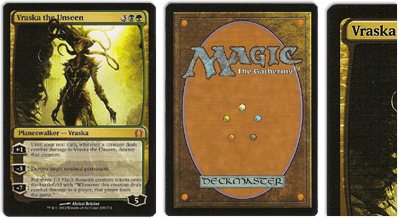 ''
Near Mint (NM)'
Near Mint condition cards show minimal or no wear from play or handling and will have an unmarked surface, crisp corners, and otherwise pristine edges outside of minimal handling. Near Mint condition cards appear 'fresh out of the pack,' with edges and surfaces virtually free from all flaws. '
'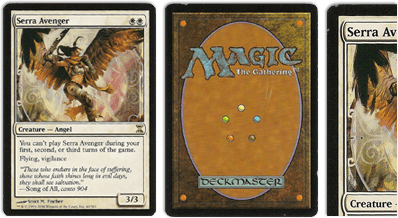 ''
Lightly Played (LP)'
Lightly Played condition cards can have slight border or corner wear, or possibly minor scratches. No major defects are present, and there are less than 4 total flaws on the card. Lightly Played condition foils may have slight fading or indications of wear on the card face. '
'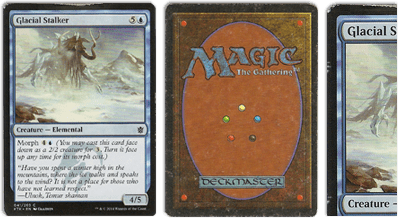 ''
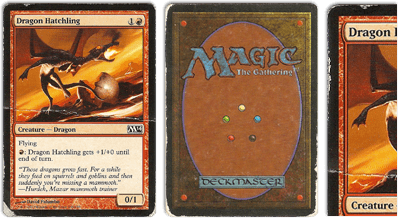
Moderately Played (MP)'
Moderately Played condition cards have moderate wear, or flaws apparent to the naked eye. Moderately Played condition cards can show moderate border wear, mild corner wear, water damage, scratches , creases or fading, light dirt buildup, or any combination of these defects. '
' ''
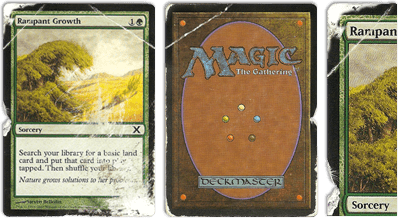
Heavily Played (HP)'
Heavily Played condition cards exhibit signs of heavy wear. Heavily Played condition cards may include cards that have significant creasing, folding, severe water damage, heavy whitening, heavy border wear, and /or tearing. '
'' ''
Damaged (D)'
Damaged condition cards show obvious tears, bends, or creases that could make the card illegal for tournament play, even when sleeved. Damaged condition cards have massive border wear, possible writing or major inking (ex. white-bordered cards with black-markered front borders), massive corner wear, prevalent scratching, folds, creases or tears. '
'